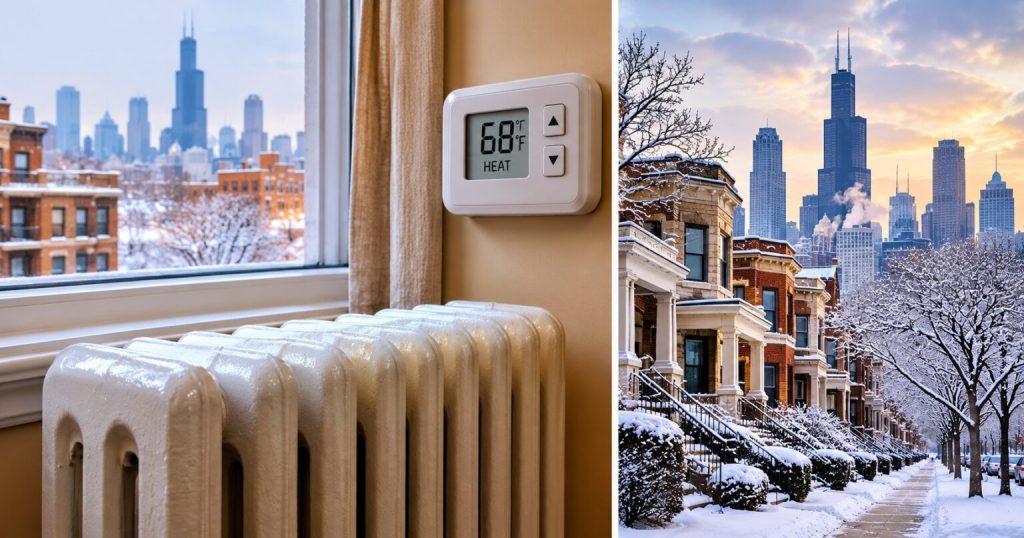
Chicago’s heating season runs from September 15 through June 1. During that period, building owners must provide adequate heat where required and keep heating equipment working.
Whether you rent an apartment, manage a multi-unit building, or own commercial property, understanding the Chicago Heat Ordinance can help you address heating problems before they become emergencies.
What Temperatures Are Required?
For residential buildings with a shared heating system, the usual minimum indoor temperatures are:
| Time | Minimum temperature |
|---|---|
| 8:30 a.m. to 10:30 p.m. | 68°F |
| 10:30 p.m. to 8:30 a.m. | 66°F |
These requirements apply to habitable rooms, toilet rooms, and bathrooms. The City also requires heating equipment in individual homes and apartments to remain in working condition. Tenants may be responsible for paying utility bills, depending on their arrangements. City of Chicago Heat Ordinance guidance
What Changed in 2026?
Buildings using the same facilities for heating and cooling have a limited 64°F minimum-temperature exception during seasonal transitions:
- Fall: Between September 15 and October 31, before the first date when the nighttime outdoor temperature falls below 45°F.
- Spring: Between April 1 and June 1, on or after the first date when the daytime outdoor temperature exceeds 75°F.
The May 20, 2026 amendment expanded these transition periods. The exception depends on the building’s equipment and the outdoor-temperature conditions; it does not apply automatically to every building.
The code also allows cooling during the heating season when required indoor minimum temperatures are maintained. Chicago Municipal Code §14X-8-802.2.2
Does the Ordinance Cover Workplaces?
Generally, occupied indoor workspaces must maintain 68°F during the heating season. Exceptions apply to certain work processes and qualifying buildings with shared heating and cooling facilities. Chicago Municipal Code §14X-8-802.3.2
Can Portable Space Heaters Replace Required Heat?
No. Portable space heaters, cooking appliances, and domestic water heaters cannot supply the heating capacity required by the ordinance. Building owners remain responsible for functioning heating equipment. Chicago Municipal Code §14X-8-802
What Should Tenants Do if There Is No Heat?
Notify your landlord or property manager immediately. Record the indoor temperature, time, and affected rooms, and keep a copy of your repair request.
To report inadequate heat, call 3-1-1 or submit a complaint through CHI311. Call 9-1-1 for an immediate danger.
The City states that building owners can face fines of $500 to $1,000 per day, per violation, for inadequate heat or nonfunctioning heating equipment. City reporting and enforcement guidance
How Can Building Owners Prepare?
Schedule heating maintenance before cold weather arrives. Have your contractor check system operation, controls, airflow or heat distribution, and components showing signs of wear.
During the heating season, respond promptly to resident complaints and communicate clearly about repair appointments. Uneven temperatures, repeated shutdowns, and unusual equipment noises are reasons to schedule service.
Need Heating Repair in Chicago?
Around the Town HVAC provides furnace repair and installation in Chicago and commercial HVAC service.
If your heating system is struggling to keep your property warm, call (312) 243-9896 or request service online.
Looking for summer requirements? Read our guide to Chicago’s Cooling Ordinance.
Reviewed October 25, 2026. Requirements vary by building and system. Refer to the linked Chicago Municipal Code for current provisions.
Schedule HVAC Service
Call or email to talk to a technician.Landlords & Tenants, please fill out this form to request HVAC work on tenant properties.(312) 243-9896